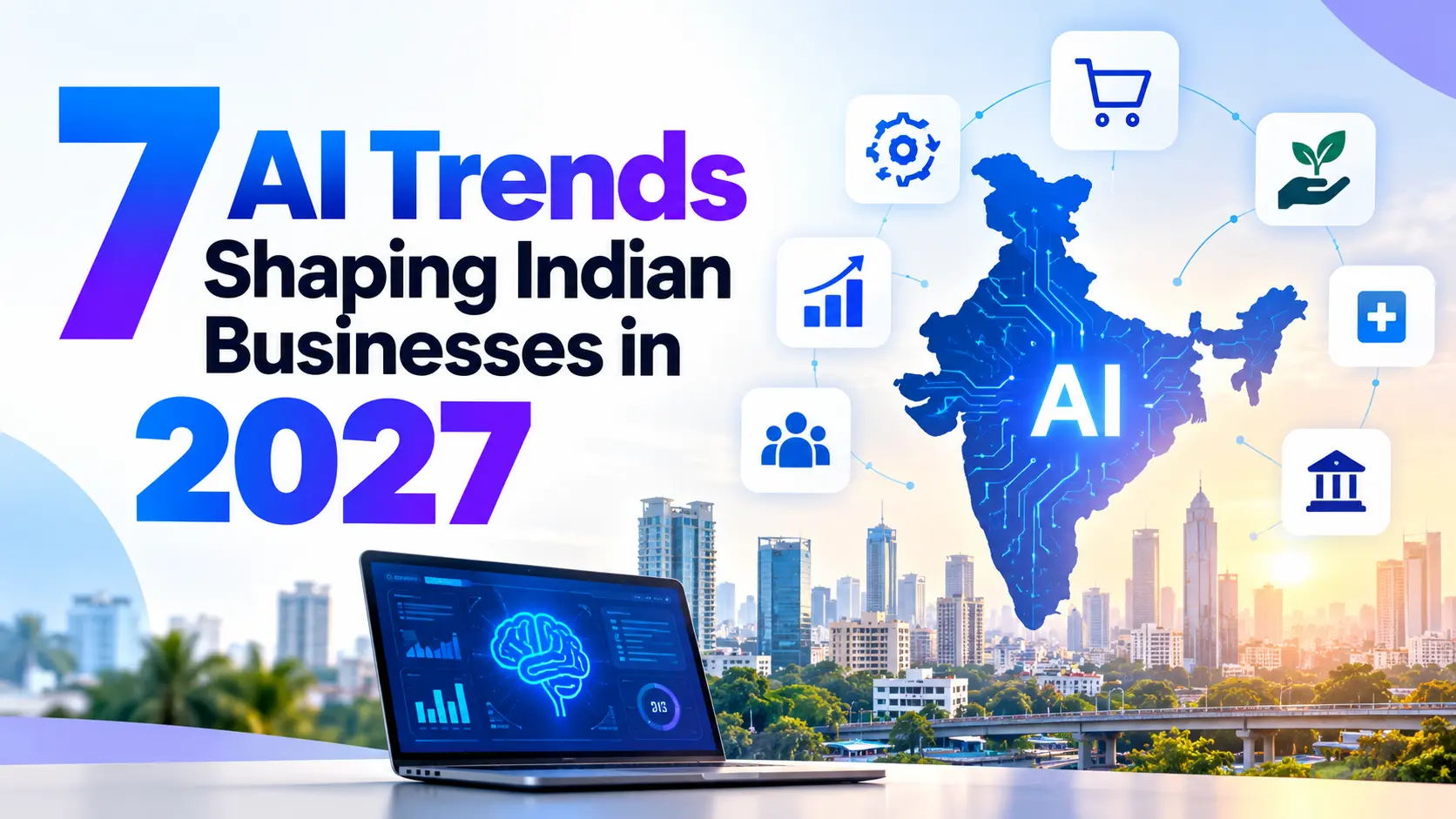
Artificial intelligence has moved from boardroom buzzword to everyday business tool in a remarkably short time. In India, companies of every size, from large enterprises to neighborhood shops, are now asking the same question: where does AI actually fit into our business? As we head into 2027, a few clear trends are emerging. Here are seven that business leaders should watch closely.
1. AI agents move from pilots to daily operations
The first wave of business AI was mostly experiments: a chatbot on the website, a pilot in one department. The next wave is about AI agents that handle ongoing work, such as following up with customers, managing bookings, tracking staff attendance and summarizing daily performance. Instead of one tool for one task, businesses will run several agents that work together across functions.
What to do: identify two or three repetitive workflows in your business and test whether an AI agent can handle them end to end with human review.
2. Conversational interfaces replace complex software
Many Indian businesses avoid enterprise software because it is complicated to learn. Conversational AI is changing that. Owners and staff can now ask questions in plain language, such as "How many orders did we deliver this week?", instead of navigating dashboards and menus. Chat is becoming the front door to business data.
3. Local language and voice AI go mainstream
India speaks many languages, and a large share of new internet users are more comfortable speaking than typing. AI that understands voice and regional languages will open new customer segments for businesses that were previously hard to reach online. Companies that communicate in the customer's own language will build trust faster.
4. Generative AI becomes a standard productivity layer
Drafting emails, writing product descriptions, creating festive offers and summarizing meetings are quickly becoming AI assisted tasks. In 2027, generative AI will be less of a special feature and more of a basic layer inside the tools teams already use, much like spell check became standard years ago.
What to do: set simple guidelines for your team on reviewing AI drafts, protecting customer data and keeping your brand voice consistent.
5. Data privacy moves to the top of the agenda
With India's Digital Personal Data Protection framework coming into force, businesses must think carefully about how they collect, store and use customer data, including data processed by AI tools. Privacy will no longer be only a legal topic. It will become a trust and brand issue that customers notice.
6. All in one platforms win over scattered tools
Small and mid sized businesses often use one app for billing, another for staff, another for customer messages and another for marketing. Each tool adds cost, logins and training time. The trend is shifting toward integrated platforms that combine many AI capabilities in one place, with shared data and a single experience.
7. AI skills become a hiring priority
As AI enters daily operations, companies will look for people who can work alongside it: staff who know how to prompt AI tools, review their output and improve workflows. This does not mean every employee needs to be a data scientist. It means basic AI literacy will become as important as basic computer skills were a generation ago.
What these trends mean for Indian businesses
The common thread across all seven trends is practicality. Indian businesses are not adopting AI for its novelty. They are adopting it to save time, reduce costs, serve customers better and compete with larger players. The winners in 2027 will be companies that start small, measure results and scale what works.
How to get started
1. List your biggest time drains. Customer queries, scheduling, paperwork and reporting are common starting points.
2. Pick one pilot. Choose a single workflow where AI can make a visible difference within weeks.
3. Set review rules. Decide which AI outputs need human approval before they reach customers.
4. Train your team. A short session on how to use AI tools well pays off quickly.
5. Review privacy. Make sure any AI tool you use handles customer data responsibly.
Looking ahead
AI in India is entering its most practical phase yet. The technology is ready, costs are falling and customers increasingly expect fast, digital experiences. Businesses that build AI into everyday operations now will be better prepared for whatever comes next.
Explore practical AI for your business. See how India Connect AI brings 36 AI platforms and agents together in one place.