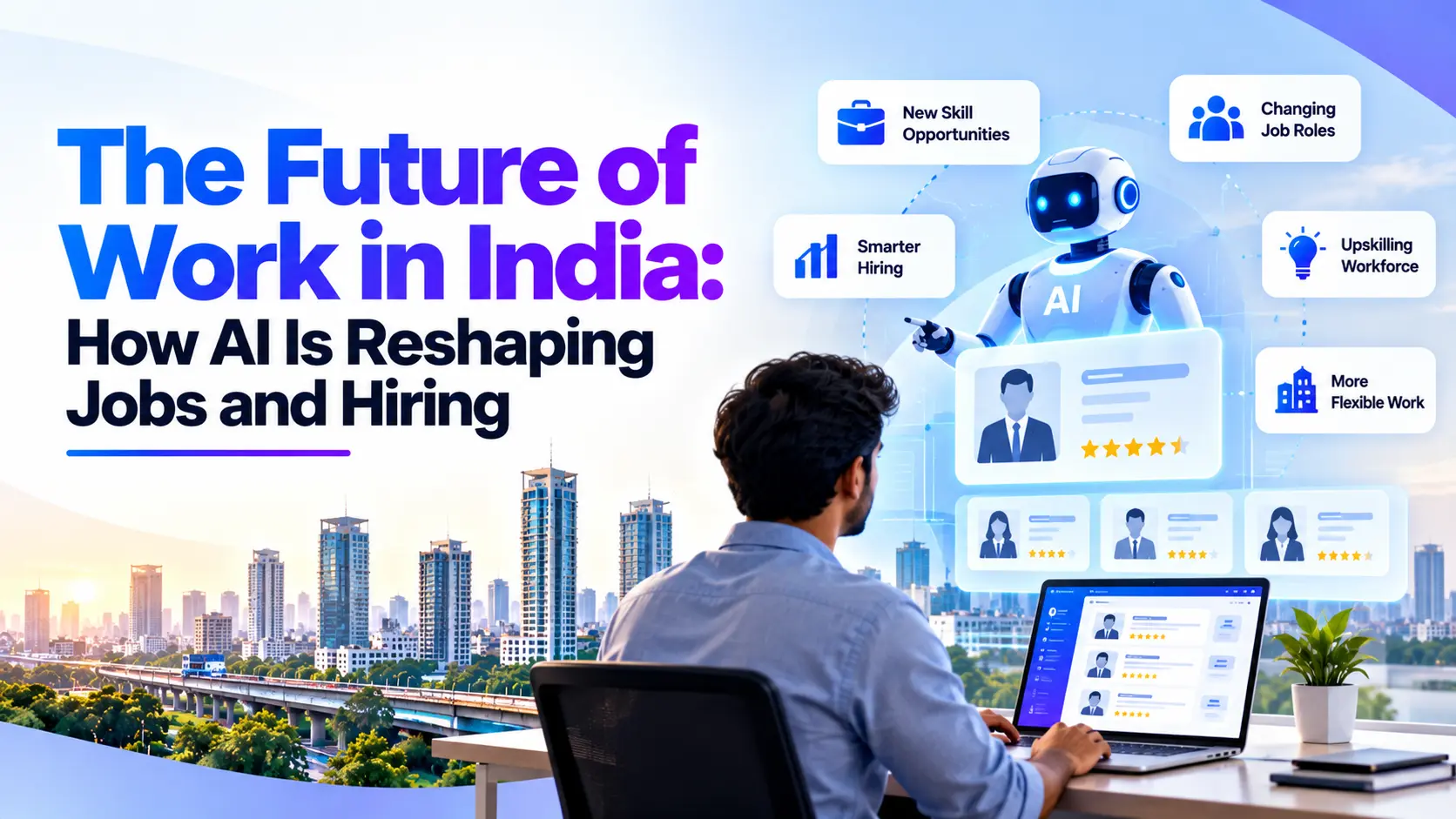
Few topics create as much curiosity, and worry, as AI and jobs. Will AI take away work? Will it create new opportunities? For a country with one of the world's youngest workforces, these questions matter deeply. The honest answer is that AI is reshaping work in India, but in ways that are more practical and more gradual than headlines suggest.
AI changes tasks before it changes jobs
Most jobs are made of many tasks. AI tends to take over specific repetitive tasks first, such as data entry, scheduling, answering routine questions or sorting documents, rather than entire roles. A receptionist may spend less time answering the same questions and more time helping visitors with complex needs. An HR executive may spend less time screening basic applications and more time interviewing.
For most workers, the near future looks like working alongside AI, not being replaced by it.
Jobs that are growing
Several types of work are seeing rising demand as businesses adopt AI:
• Customer experience roles that handle complex, human conversations AI cannot.
• Digital marketing and content roles that use AI tools to create and analyze campaigns.
• Field and service roles such as technicians, electricians and delivery staff, whose work is physical and local.
• AI operations roles that set up, monitor and improve AI tools inside businesses.
• Data and analytics roles that turn business data into decisions.
How hiring is changing
Recruitment in India is also being transformed:
1. Faster matching. AI helps match job seekers with relevant openings based on skills and location, reducing endless scrolling through irrelevant listings.
2. Local job discovery. Platforms increasingly help people find work close to home, which matters greatly for blue collar and part time workers.
3. Smarter screening. Employers use AI to sort large volumes of applications, so recruiters can focus on the best fits.
4. Fraud awareness. As fake job offers remain a real problem, verified platforms and smarter checks help protect job seekers.
The skills that will matter most
Whether you are a student, a working professional or a business owner, a few skills will become more valuable:
• AI literacy: knowing how to use AI tools, ask good questions and check their answers.
• Communication: explaining ideas clearly to customers and colleagues.
• Problem solving: handling situations that do not follow a script.
• Adaptability: learning new tools as workplaces change.
• Domain expertise: deep knowledge of a trade, industry or craft that AI cannot replicate.
What employers should do
Businesses that want to benefit from AI without losing good people should:
1. Explain to staff how AI will be used and what it will not do.
2. Train employees to work with new AI tools.
3. Redesign roles so people focus on higher value work.
4. Use AI in hiring fairly and keep humans involved in final decisions.
5. Measure the impact on both productivity and employee experience.
What job seekers should do
• Keep your profile updated on trusted job platforms.
• Learn at least one or two AI tools relevant to your field.
• Highlight practical skills and real examples of your work.
• Be cautious of offers that ask for payment or seem too good to be true.
• Keep learning through short courses, videos and on the job practice.
The role of small businesses
Much of India's employment comes from small and medium businesses, not large corporations. As these businesses adopt AI for customer service, bookings and staff management, they can grow faster and hire more people for roles that need a human touch. The future of work in India will be shaped as much by neighborhood shops and local manufacturers as by large technology companies.
A balanced view
AI will certainly change some roles significantly, and some tasks will disappear. At the same time, new roles will emerge and many jobs will become more interesting as routine work is reduced. The impact will depend heavily on how businesses, educators and policymakers respond, and on how quickly workers can build new skills.
India's advantage
India has a large, young and increasingly digital workforce. If that workforce learns to work with AI, the country is well placed to benefit from this shift rather than be disrupted by it. Accessible platforms that connect people to local jobs, learning and opportunities will play an important role in that transition.
Find work or hire talent near you. Explore the Job and Recruitment platforms in India Connect AI.