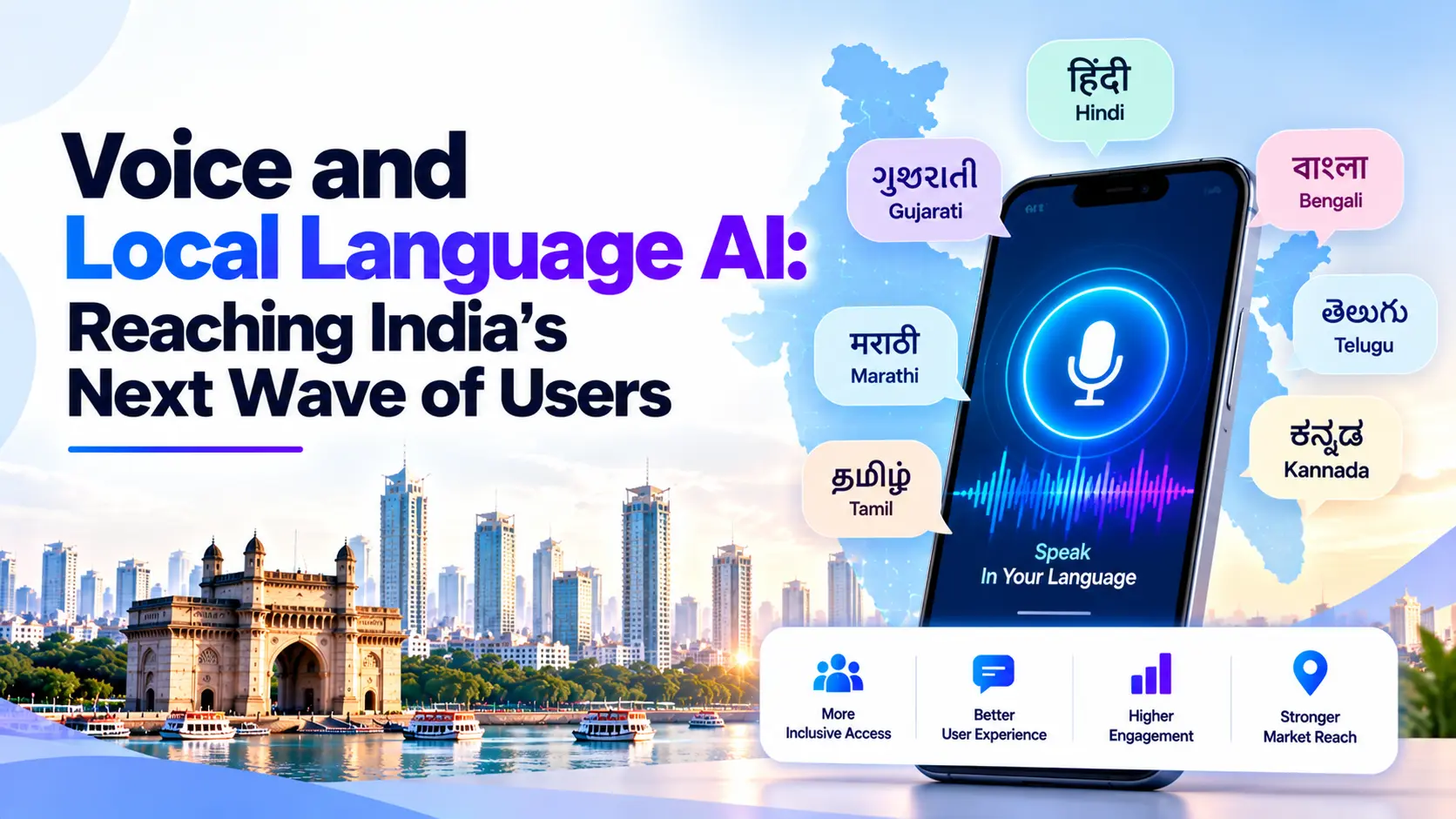
India's digital story has often been told in English. But the next chapter is being written in Hindi, Gujarati, Tamil, Marathi, Bengali, Telugu and many other languages. A growing share of new internet users prefer to speak rather than type, and prefer their own language over English. For businesses and technology companies, this shift is one of the most important trends of the decade.
Why language matters so much
India recognizes 22 scheduled languages and is home to hundreds more spoken languages and dialects. Many people who are comfortable using a smartphone for calls, videos and messages still find English heavy apps difficult. When an app speaks their language, usage and trust rise dramatically.
Language is not just about translation. It is about feeling understood.
The rise of voice
Typing on a small screen, especially in Indian scripts, can be slow and frustrating. Voice removes that barrier. People already send voice notes to family and businesses every day. It is natural that they also want to search, ask questions and complete tasks by speaking.
Voice AI makes this possible by turning speech into text, understanding the meaning and responding, sometimes with voice as well.
What has changed in AI
Until recently, AI for Indian languages lagged far behind English. Several changes are closing that gap:
1. Better speech recognition for Indian accents and languages.
2. Larger language datasets built through public and private efforts, including government initiatives such as Bhashini focused on Indian language technology.
3. Multilingual AI models that can understand and respond in many languages.
4. Handling of mixed language, such as Hinglish, which reflects how many people actually speak.
Opportunities for businesses
Customer support in local languages
Businesses can answer customer questions in the language customers prefer, improving satisfaction and reducing misunderstandings.
Reaching Tier 2 and Tier 3 markets
Many fast growing customer segments are in smaller cities and towns. Local language experiences help businesses reach them effectively.
Voice based commerce and bookings
Customers can place orders, book appointments or check status by simply speaking.
Inclusive hiring and services
Job platforms and service apps that work in local languages open opportunities to workers who were previously left out of digital hiring.
Better marketing
Messages in a customer's own language feel more personal and perform better than generic English content.
Real world scenarios
• A kirana store owner in Vadodara checks the day's orders by asking a question in Gujarati instead of reading an English dashboard.
• A farmer's family in Madhya Pradesh books a tractor repair by sending a voice message in Hindi.
• A job seeker in Coimbatore searches for nearby openings by speaking in Tamil.
• A clinic in Pune sends appointment reminders in Marathi, reducing missed visits.
In each case, language removes friction that once kept people away from digital services.
Challenges to solve
Local language AI still has hurdles:
• Accuracy varies across languages and dialects.
• Mixed language input can confuse simpler systems.
• Cultural context matters; a direct translation may not carry the right meaning or tone.
• Privacy concerns apply to voice data just as they do to text.
Businesses should test language features carefully with real users before rolling them out widely.
How businesses can prepare
1. Know your customers' languages. Look at where your customers are and what they speak.
2. Start with key touchpoints. Customer support and important notifications are good places to begin.
3. Test with native speakers. Make sure messages sound natural, not machine translated.
4. Offer choice. Let customers switch between English and their preferred language.
5. Plan for voice. Consider where speaking would be easier than typing for your users.
The bigger picture
For India, local language and voice AI are about more than convenience. They are about inclusion. When technology works in every language, more people can access jobs, services, education and business opportunities online. That makes the digital economy larger and fairer. It also means businesses can grow beyond English speaking customers and build loyalty in markets their competitors may be ignoring.
Looking ahead
The companies that lead the next phase of India's digital growth will likely be those that serve users in the language and format they prefer. AI is making that possible at a scale that was unimaginable just a few years ago.
Follow how Bright India AI is building AI for India. Explore India Connect AI.